The Practical Value of Drawn Floral Illustrations for Event Design
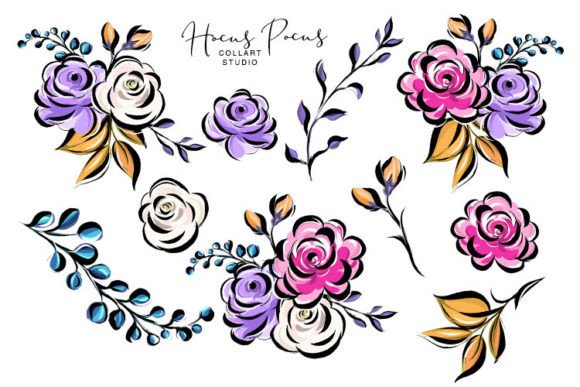
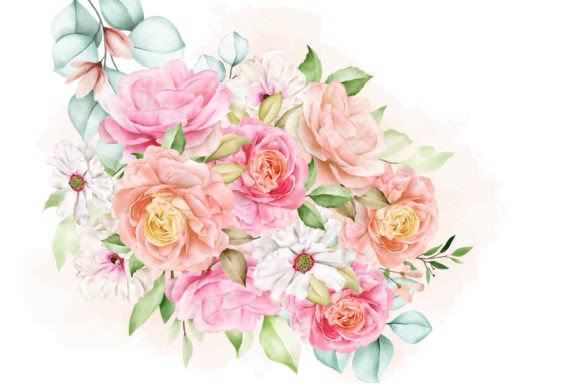
In the world of event planning and graphic design, resources that blend aesthetic appeal with functional flexibility hold significant value. Drawn floral illustrations represent a category of digital graphics characterized by hand-drawn, often whimsical, depictions of flowers, leaves, and botanical elements. Unlike rigid vector icons or highly realistic stock photography, these illustrations carry an artistic, personal touch that can elevate the visual narrative of an event like a wedding or birthday party. Their worth lies not just in their beauty, but in their utility as a design foundation—a starting point that professionals and DIY creators can adapt to build a cohesive and personalized visual identity.
Characteristics and Core Strengths
True drawn floral graphics, such as the set described, typically come in formats like Ai (Adobe Illustrator), EPS, and JPG. This format selection is crucial. The Ai and EPS files contain scalable vector data, meaning the illustrations can be resized infinitely without loss of quality, from a small invitation footer to a large banner backdrop. The JPG provides a ready-to-use raster image for simpler applications. The hand-drawn style inherently offers a soft, organic feel that contrasts with the often cold precision of digital design. This human touch is a key strength, fostering warmth and authenticity in event materials.
The practical value is multifaceted. First, they serve as a time-saving asset. Creating a suite of original floral illustrations from scratch demands considerable skill and hours. A well-crafted set provides immediate, high-quality raw material. Second, they ensure visual consistency. Using the same illustration suite across invitations, menus, signage, and digital assets creates a professional, unified look. Their flexibility is another core strength; vectors can be edited—colors changed to match a wedding palette, elements rearranged, or components isolated for different uses.
Evaluating Performance in Real-World Use
In application, the usability of drawn floral illustrations hinges on the quality of the source files and the designer’s intent. A set described as "very easy to edit" suggests layers are logically organized within the Ai file, allowing users to modify elements without undue difficulty. This is vital for professionals working under tight deadlines. For a wedding, for example, the default colors might be altered to precise Pantone shades matching the bridal party attire. Their performance on output—whether printed on textured invitation paper or displayed on a website—depends on the original artwork's line quality and resolution. Clean, deliberate strokes translate well across mediums.
Long-term value is also noteworthy. Unlike trend-specific photography, classic drawn florals possess a timelessness. A designer or small business owner can reuse the same asset across multiple client projects or future events, with edits making each use distinct. This represents a cost-effective accumulation of design resources.
Who Benefits Most from Drawn Floral Assets?
The audience for such graphics is broad but specific. Professional event planners and freelance graphic designers are primary beneficiaries, using them as a reliable, editable component in client work. They streamline the initial design phase, allowing focus on layout and client customization. Small business owners, particularly those in fields like floristry, event venues, or stationery, can use them to create branded materials without commissioning custom art for every project.
Serious hobbyists and DIY enthusiasts planning their own weddings or milestone birthdays also find immense value. With access to vector software like Adobe Illustrator or even free alternatives that support EPS files, they can achieve a polished, custom look that transcends generic template offerings. Bloggers and content creators might use elements for website graphics or themed content visuals. The key requirement is a basic comfort with graphic editing software; the "easy to edit" claim must be tested against the user’s own skill level.
Practical Considerations and Potential Limitations
While drawn floral illustrations offer clear advantages, a realistic evaluation includes understanding their boundaries. Their style is distinct: organic, soft, and artistic. They may not fit projects requiring ultra-modern, minimalist, or corporate aesthetics. The included JPG is useful for quick placements, but for any substantive customization, the vector files are necessary. Users without software to open Ai or EPS files will find their utility severely limited.
Another consideration is scope. A set focusing on single-sided invitation size suggests the illustrations are crafted for smaller-scale print items. While vectors are scalable, the original composition and detail level might be optimized for a 5x7 inch space, not a wall-sized mural. Assessing the variety and quantity of illustrations in the set is important—are there enough varied elements (full bouquets, single blooms, leafy sprigs) to sustain a full event suite without becoming repetitive?
Quality of the drawing itself is paramount. Truly useful hand-drawn florals should have confident line work, balanced compositions, and a sense of natural flow. Poorly drawn, shaky, or amateurish vectors will not elevate a design, regardless of editability.
Integrating Drawn Florals into a Creative Workflow
For those who find the style appropriate, integration is straightforward. The workflow often starts in Adobe Illustrator, where the master file is opened. Colors are adjusted to the project’s palette. Specific elements might be copied, rearranged, or combined to create a unique logo or monogram for the event. From there, elements are exported as needed for different applications: high-res PNGs for web use, placed back into Illustrator for invitation layout, or even imported into Photoshop for textured composite images.
A practical example: a wedding designer uses a floral cluster from the set, changes its colors to sage green and blush pink, isolates it for the corner of an invitation, then extracts a single bloom for the website’s footer. The same core asset creates harmony across print and digital. For a birthday party, the same illustrations could be recolored in vibrant, festive tones and used on party favors, a banner, and an event program.
Recommendations for use include always working from the vector master when possible, keeping a library of your edited versions for future reference, and pairing the florals with complementary typography that matches the hand-drawn elegance—perhaps a classic script or a clean serif font.
Ultimately, drawn floral illustrations are a pragmatic design investment. Their value is measured not merely by their initial beauty, but by their capacity to be transformed, their role in ensuring visual consistency, and the time they save in the creative process. They bridge the gap between unique artistic expression and reproducible design utility. For the professional, they are a versatile toolkit component; for the engaged hobbyist, a path to a personalized, polished result. The decision to utilize them hinges on alignment with the event’s visual tone, the technical ability to edit vectors, and the need for a foundational graphic element that can grow and adapt across an entire event’s identity. When these conditions are met, they prove to be an asset of enduring practical worth.