The Art and Utility of Floral Ornate Letters in Modern Design
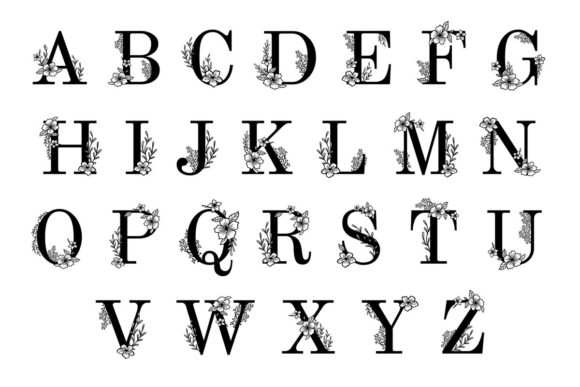
The digital age has not diminished our appreciation for intricate, handcrafted aesthetics. In fact, it has provided new tools and platforms to revive and proliferate them. Among these revived arts is the use of floral ornate letters, a design element that blends botanical beauty with typographic form. These are not merely alphabets; they are miniature illustrations where each character is intertwined with vines, blossoms, leaves, and delicate flourishes. From vintage flower sprigs ornaments to royal ornate ABC sets, this style speaks to a timeless elegance that contemporary creators are eagerly integrating into their work.
A Blooming History: From Monograms to Vector Files
The concept of ornamenting letters with floral motifs is deeply historical. It traces back to illuminated manuscripts, where monks painstakingly decorated sacred texts, and to the Victorian era, where floral monograms adorned personal stationery, invitations, and household items. This was a language of status and personal expression. Today, this tradition is preserved and expanded through digital means. A typical modern product file, such as one containing an antique alphabet vector illustration set, might include a vector EPS10 file for professional editing and a JPEG 72ppi as a preview. This technological translation ensures the intricate detail of vintage flower sprigs ornaments is scalable and adaptable without loss of quality.
Core Characteristics of Floral Ornate Alphabets
What defines this style beyond the mere presence of flowers? Several key characteristics are consistent across quality sets. First is integration: the floral elements are not simply placed beside the letter; they are woven into its structure, often forming part of the serif or the letterform itself. Second is balance: the ornamentation, while detailed, does not overwhelm the legibility of the core character. This is a crucial consideration for designers. Third is thematic coherence: a set of flourishes elegant decor letters will often follow a consistent botanical theme—perhaps all roses, or a mix of wildflowers—creating a harmonious collection rather than a disparate assortment.
Practical Applications Across Industries
The utility of floral ornate letters is remarkably broad, appealing to a spectrum of professionals and hobbyists. For graphic designers and branding specialists, these alphabets offer a quick way to inject luxury, heritage, or natural beauty into a logo, packaging, or promotional material. A wedding planner might use them exclusively for invitations and signage to establish a romantic, garden-party atmosphere. Educators and researchers in fields like art history or design theory might utilize these vectors in publications or presentations to visually support discussions on ornamental typography. Even small business owners, such as boutique cafe proprietors, can employ them on menus or wall decals to create a specific vintage ambiance.
Key Advantages for Creators
Working with pre-made vector sets, like those containing royal ornate ABCs, presents significant advantages. The foremost is time efficiency. Crafting such intricate letters from scratch requires considerable skill and hours. A ready-made, editable vector file provides a high-quality foundation. Secondly, it ensures consistency. When you need a full alphabet or a set of numbers, a professionally designed set guarantees that the style and detail level match across all characters. Thirdly, it offers flexibility. Using a vector editor like Adobe Illustrator, designers can easily separate elements, remove specific flowers or leaves, edit colors, or scale the artwork to any size without pixelation, making it suitable for both a small business card and a large storefront banner.
Critical Considerations Before Use
While beautiful, floral ornate letters are not a universal solution. Several considerations must be weighed. Legibility is paramount. In contexts where clear, quick reading is essential—such as in body text or important directional signage—an overly ornate font may hinder comprehension. It is best reserved for headlines, initials, logos, or decorative elements. Contextual appropriateness is another factor. The elegant, sometimes formal nature of these letters might clash with a brand aiming for a minimalist, tech-forward, or rugged image. Finally, technical consideration: users must ensure they have, or can access, software capable of editing vector EPS10 files to truly customize the asset to their project’s needs.
Workflow Integration for Optimal Results
Incorporating these elements into a design workflow requires a mindful approach. The process often begins with selecting the right set. One must evaluate whether the floral ornate letters match the project’s theme—are the flowers too bold, too delicate, too vintage? After acquisition, the practical step is to open the EPS10 file in a vector editor. Here, the designer can inspect the layers, often finding that individual floral ornaments are grouped or layered, allowing for removal or adjustment. The key is to use these letters as a starting point, not a final, immutable asset. Changing color palettes to match a brand, simplifying a letter by removing some flourishes for cleaner logos, or combining several monograms into a new pattern are all common and effective practices.
Observing Trends and Enduring Relevance
Current design trends show a strong resurgence of maximalism, detailed illustration, and a nostalgia for craftsmanship. Floral ornate letters fit perfectly within this movement. However, their relevance is not merely trend-driven. They satisfy a persistent human desire for beauty and connection to nature within communication. This is observed in the steady demand for such assets across platforms catering to creators, from digital marketplaces to design software libraries. Their application has evolved from purely physical print to digital spaces—they now adorn website headers, social media graphics for luxury brands, and even digital certificates or awards, proving their adaptability.
Ultimately, the value of floral ornate letters lies in their dual nature as both art and tool. They carry the weight of history and the craft of illustration, yet they arrive as a modern, editable product file ready for commercial and creative projects. They empower a broad audience—from professional designers to hobbyists crafting a personal project—to access a level of ornamental detail that would otherwise be prohibitive to create. By understanding their characteristics, weighing their use cases, and mastering their customization through vector software, one can effectively harness this elegant design resource to add a unique, blooming touch to any visual endeavor.