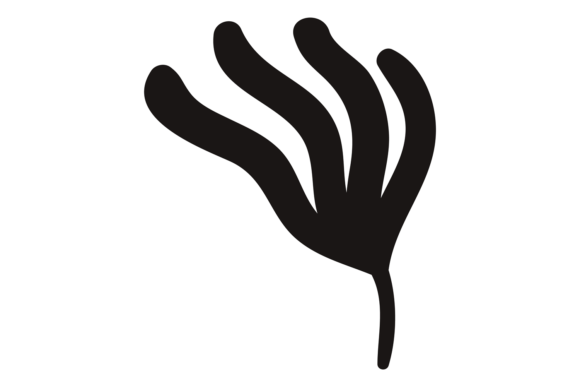
The Decorative Element for Floral Ornament I: Integrating Classic Folk Art into Modern Digital Workflows
The world of digital design is rich with resources, but the challenge often lies in the thoughtful integration of an asset into an existing creative or commercial process. Decorative Element for Floral Ornament I, presented here as an isolated EPS and JPG vector graphic on a white background, is not merely a file to download. It is a potent, stylistically defined component that enters a workflow with specific requirements and possibilities. Understanding its nature and the stages at which it becomes most useful is key to leveraging its full potential, whether you are designing a product label, crafting a brand identity, or producing educational materials.
Defining the Asset: A Nordic Folk Style Floral Ornament
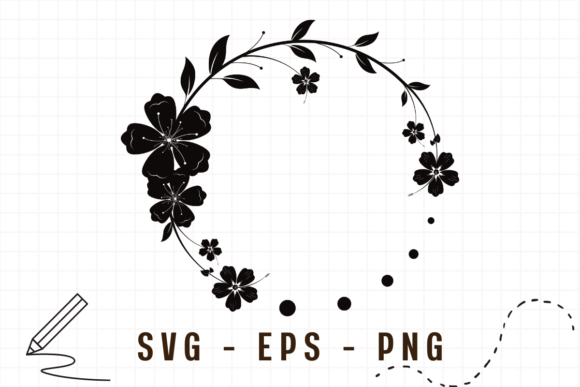
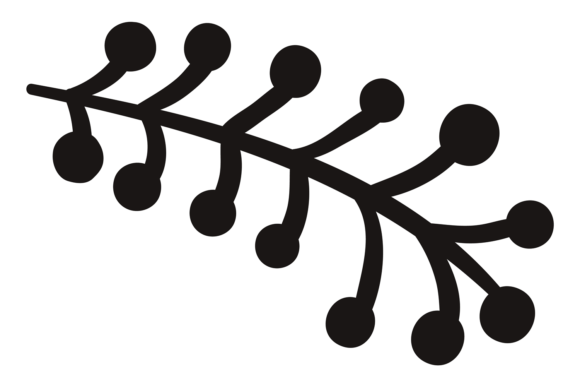
At its core, Decorative Element for Floral Ornament I is a precise digital illustration. The “Nordic folk style” designation is crucial, informing its aesthetic character: often symmetrical, intricate, and drawing from historical Scandinavian craft traditions like wood carving or textile work. The “I” suggests it may be part of a series, a consideration for maintaining visual consistency across multiple projects. Available in both EPS (vector) and JPG (raster) formats, this dual offering directly impacts how you prepare for its use. The EPS file, scalable without loss of quality, is essential for print design, logo integration, or any application requiring resizing. The JPG, a ready-to-place bitmap, serves well for quick digital mockups, web graphics at fixed dimensions, or as a visual reference.
Its isolation on a white background is a practical feature, simplifying the initial preparation phase of your workflow. This means the asset arrives without embedded, conflicting backgrounds, ready for clipping, layer manipulation, or color adjustment in software like Adobe Illustrator, Inkscape, or even presentation tools like Canva. This pre-cleaning saves valuable time in the asset preparation stage, a often-overlooked but critical step for efficiency.
Phase One: Pre-Project Planning and Conceptual Integration
The most effective use of decorative elements like this begins before any design software is opened. This is the strategic phase where the asset is evaluated for compatibility with the project’s core goals.
Consider a small business owner developing packaging for a handcrafted soap. The Nordic folk aesthetic conveys natural, traditional, and artisanal values. Does this align with the brand story? A marketer creating a campaign for a winter festival might see this floral ornament as a key visual motif for all touchpoints—social media graphics, printed posters, and website banners. Here, deciding to use the EPS format from the outset ensures consistency and quality control across all mediums, from large banners to small digital ads.
This element also interacts with other resources and decisions. Will it be the sole decorative feature or combine with other minimalist geometric elements for a contemporary twist? Does its intricacy require simplification for very small applications? Answering these questions during planning prevents mid-project revisions and ensures the asset enhances, rather than complicates, the final output.
Practical Preparation and File Management
Upon acquiring Decorative Element for Floral Ornament I, immediate organization is key. Store both the EPS and JPG in a clearly named project folder or a central digital asset library. For teams, include a brief style note referencing its “Nordic folk” origin to guide other collaborators. If your workflow involves multiple software tools, check the EPS file’s compatibility with your primary vector editor. This upfront check avoids a disruptive discovery later that the file needs conversion.
Phase Two: Active Implementation and Design Execution
This is the hands-on phase where the asset is manipulated and placed into your composition. The process here is heavily dependent on your chosen format.
Using the EPS vector file in a program like Illustrator allows for profound flexibility. You can ungroup elements, edit individual strokes, recolor sections to match a brand palette, or extract a single floral motif to use as a repeating pattern. This deep editing capability makes it a foundational component rather than a static sticker. For example, a freelance web designer could modify the ornament’s colors to align with a client’s website theme and then export SVG versions for interactive, scalable web use.
The JPG file serves a different, but equally valid, execution path. An educator preparing a quick worksheet or a blogger creating a blog header image might drag the JPG directly into Photoshop or Google Slides. While offering less editing freedom, it enables rapid implementation and is perfect for projects with tight deadlines or where the ornament will be used at its provided resolution.
During execution, consider the ornament’s interaction with other design principles. Its intricate nature might demand generous negative space around it to prevent visual clutter. When used alongside text, ensure typography choices—perhaps a clean, sans-serif font—complement and don’t compete with the traditional style of the ornament.
Workflow Examples in Context
For a publisher designing a book cover for a historical novel, the ornament could be incorporated early in the process as a border element. Using the EPS file, the designer might sample its primary colors to establish the cover’s overall color scheme, creating a deeply integrated design. A hobbyist creating custom greeting cards might use the JPG as a central decorative element, printing directly onto card stock, demonstrating how a simple workflow can yield professional-looking results.
Phase Three: Post-Project Adaptation and Long-Term Value
The utility of Decorative Element for Floral Ornament I often extends beyond a single project. This phase concerns its reuse, adaptation, and role in building a coherent visual library.
After completing a festival campaign, the marketing team could archive the modified EPS files—perhaps in specific color variants—for future annual events, ensuring brand continuity and saving design time next year. This is a key aspect of long-term use and organization. A graphic designer who used the ornament for a client’s logo might retain it as part of their personal asset collection for future projects requiring a similar aesthetic tone, building efficiency over time.
The asset’s isolated nature facilitates this reuse. Because it’s on a white background, it can be easily adapted to new contexts without the need to remove complex backgrounds from old compositions. Furthermore, if “Decorative Element for Floral Ornament I” is indeed part of a series, acquiring other numbers in the series post-project can expand your toolkit for creating families of related designs, such as a suite of product labels for different but related items.
Integrating the Element Smoothly into Your Creative Routine
Successful integration hinges on treating such assets as dynamic tools rather than static images. Begin by assessing the stylistic fit during your project planning stage. Make a conscious format choice (EPS for editable scalability, JPG for fixed rapid use) based on your project outputs. During execution, leverage the format’s strengths: edit vectors deeply or place JPGs swiftly. Finally, consider the ornament’s future potential by storing modified versions and noting its stylistic traits for your asset library.
By understanding Decorative Element for Floral Ornament I through these phases—planning, execution, and legacy—you move beyond simply using a graphic. You strategically employ a stylistic component that can add authentic character, streamline production, and contribute to a cohesive visual identity across multiple projects. Its value lies not just in its beautiful Nordic folk design, but in the thoughtful process of making it an integral, functional part of your work.